Food Delivery
UberEats

My Role
UX Researcher, UI Designer
Duration
4 months
Tools
Figma, Useberry, Google Forms, Excel
Link
Overview
Introducing Uber Eats Dietary Filters, your go-to companion for finding food that fits your lifestyle! This redesigned feature makes it effortless to discover vegetarian, vegan, halal, gluten-free, and other dietary-friendly options. With intuitive filters, clear restaurant tags, and personalized settings, ordering becomes faster and more inclusive. Whether you’re health-conscious or following cultural preferences, enjoy a stress-free, tailored food discovery experience—because great meals start with the right choices.
Problem Statement
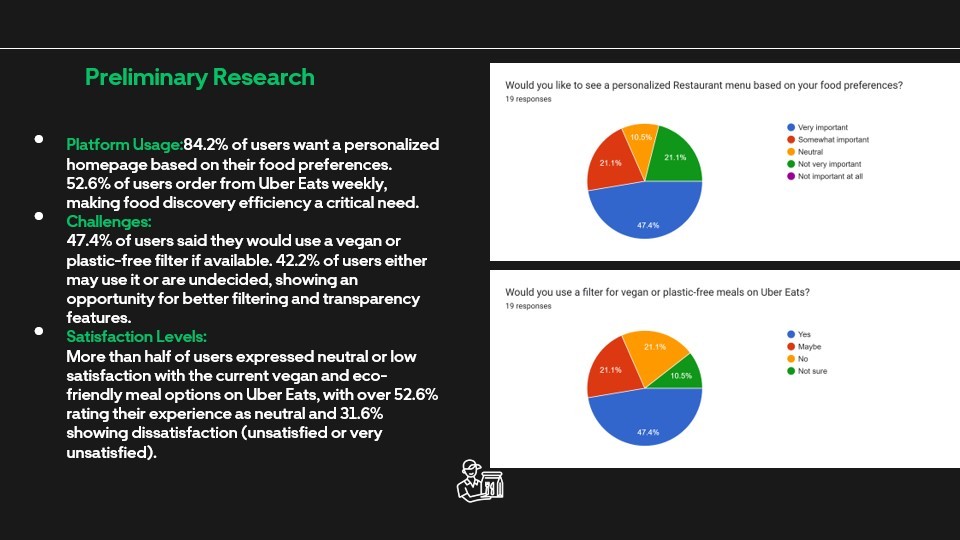
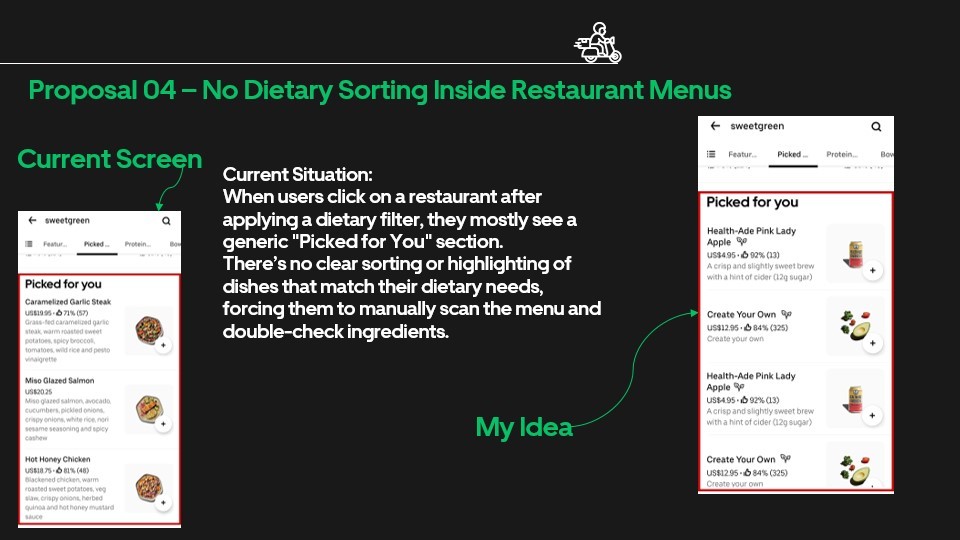
Many Uber Eats users with specific dietary needs—such as vegetarian, vegan, halal, or gluten-free—struggle to quickly identify suitable restaurants. Current search and filter options are limited, leading to frustration, wasted time, and accidental orders that don’t meet dietary preferences. This gap reduces user satisfaction and can result in lost orders for the platform.
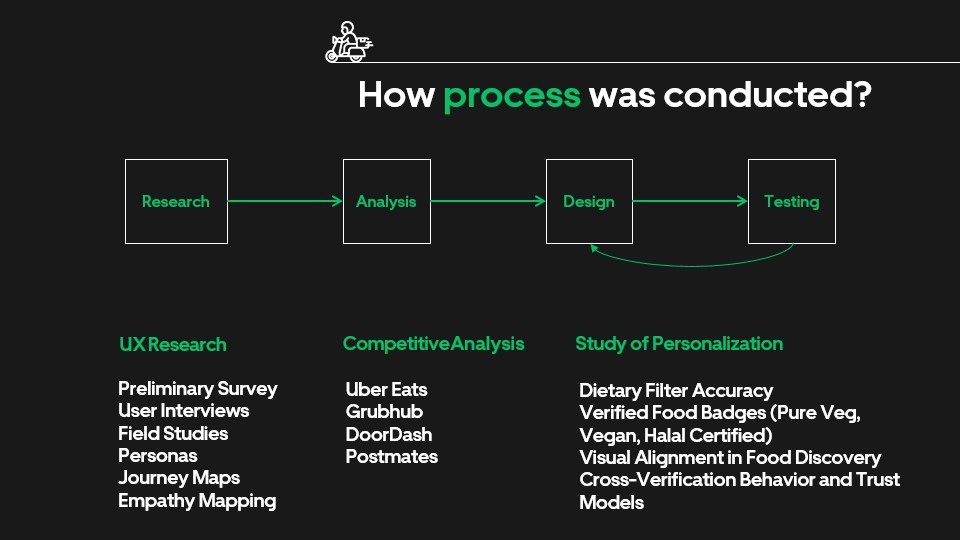
What was the gap?
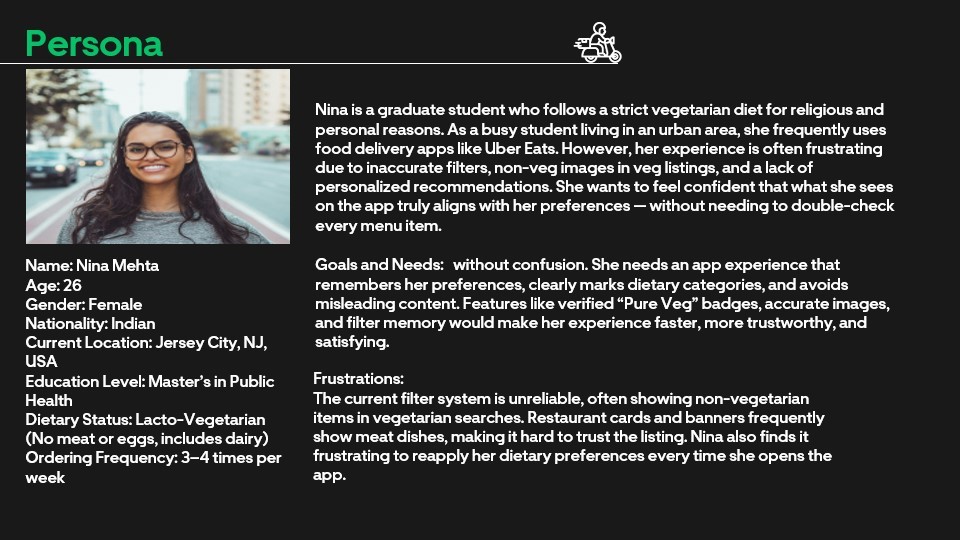
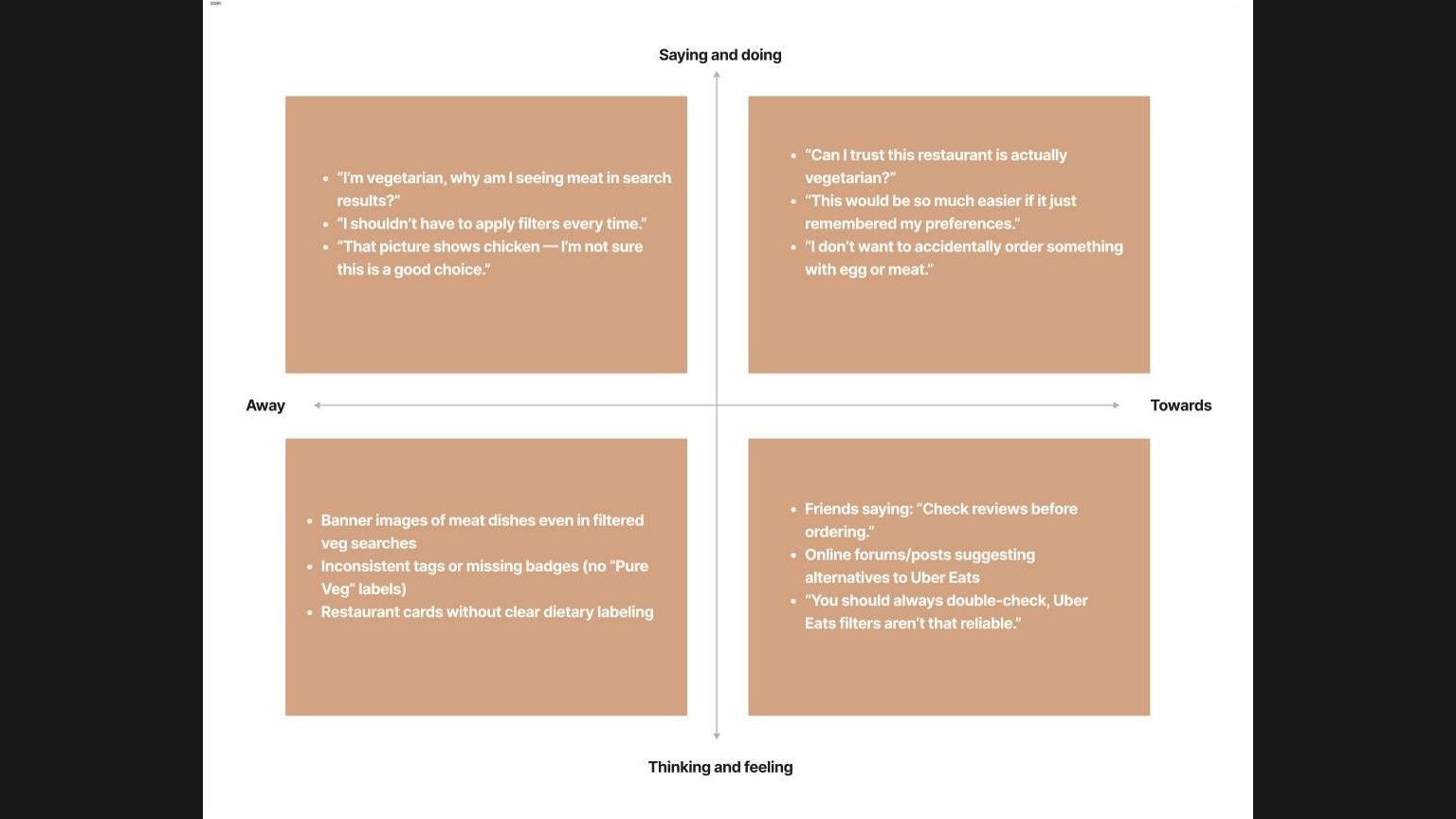
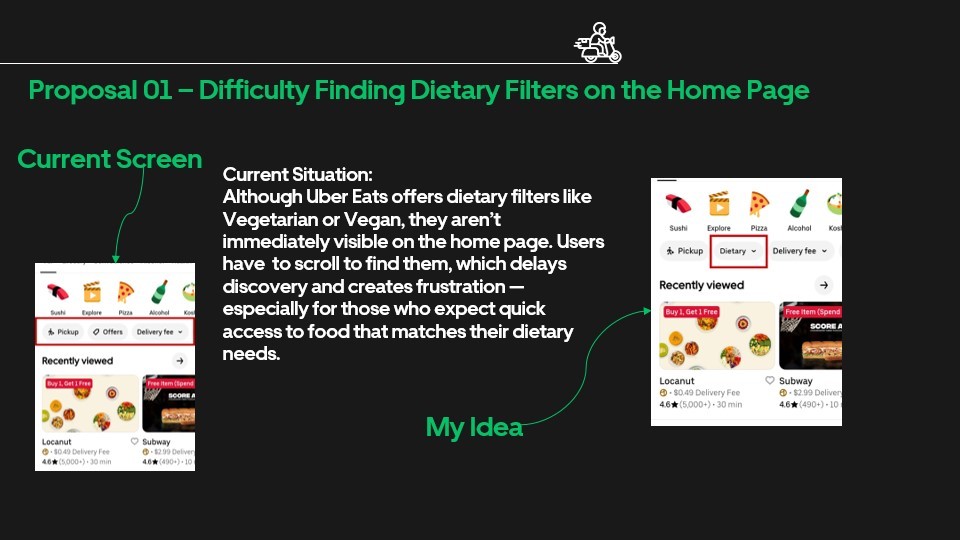
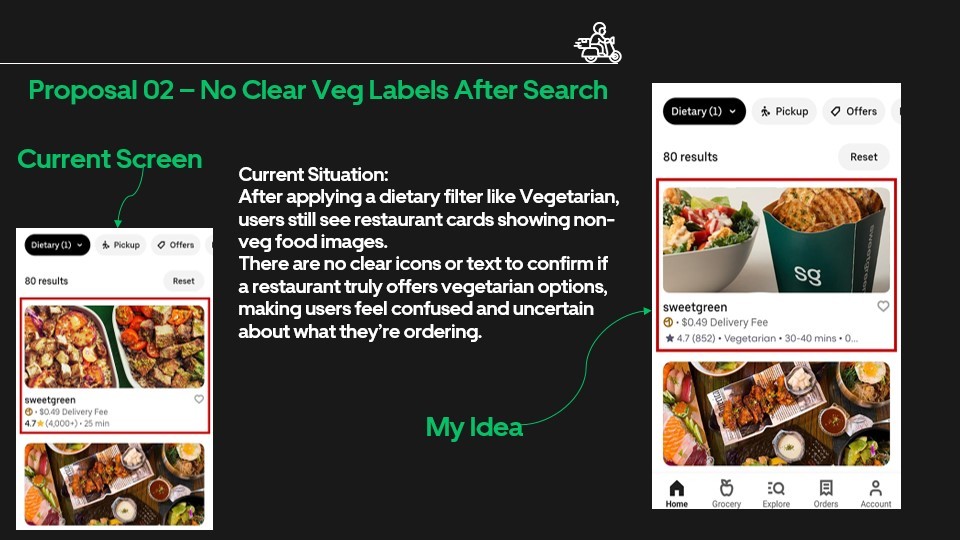
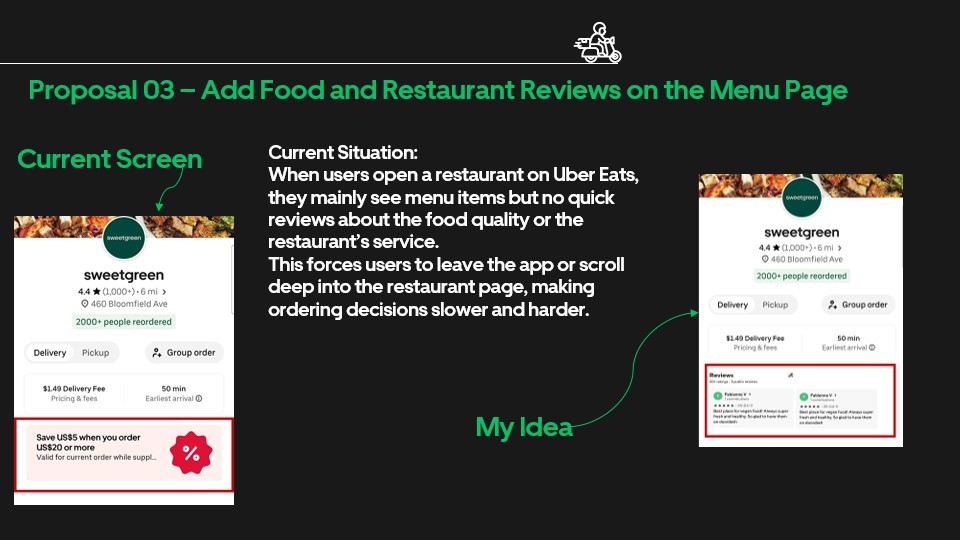
Uber Eats lacked a clear, visible and intuitive system for users to quickly find restaurants that matched their dietary preferences (e.g., vegetarian, vegan, halal, gluten-free). While some filters existed, they were hidden or inconsistent, and restaurant cards didn’t clearly display dietary tags. This meant users had to manually open multiple restaurant pages, wasting time and often leading to frustration or incorrect orders.
Recommendations
Prototypes
Uber Eats lacked a clear, visible, and intuitive system for users to quickly find restaurants that matched their dietary preferences (e.g., vegetarian, vegan, halal, gluten-free). While some filters existed, they were often hidden or inconsistent, and restaurant cards didn’t clearly display dietary tags. This meant users had to manually open multiple restaurant pages, wasting time and sometimes leading to frustration or incorrect orders.
Generic Search Prototype:
Shows the current search flow without clear dietary filters, requiring users to open restaurant pages to check compatibility—adding time and effort.
Specific Search Prototype:
Places dietary filters front and center on the main screen, allowing users to instantly narrow results and make confident, faster dining decisions without unnecessary steps.
View More Work...
Lifestyle
PlantAura
Beauty and Cosmetics Website
Glossier-ReDesign

AR
Social AR Filters